
The wild horses of Carova are the reason many families choose this corner of the Outer Banks in the first place. These are not zoo animals or attractions on display. The estimated 80 to 90 Colonial Spanish Mustangs that roam the Currituck Outer Banks are genuinely wild descendants of horses brought to North America in the 1500s. They live, breed, and die on this stretch of beach exactly as their ancestors did, and seeing them in person is unlike any other wildlife experience on the East Coast.
This guide walks you through where the wild horses of Carova are most often spotted, the best times of day to see them, what to do (and never do) when you encounter one, and how to maximize your chances of a sighting during your stay.
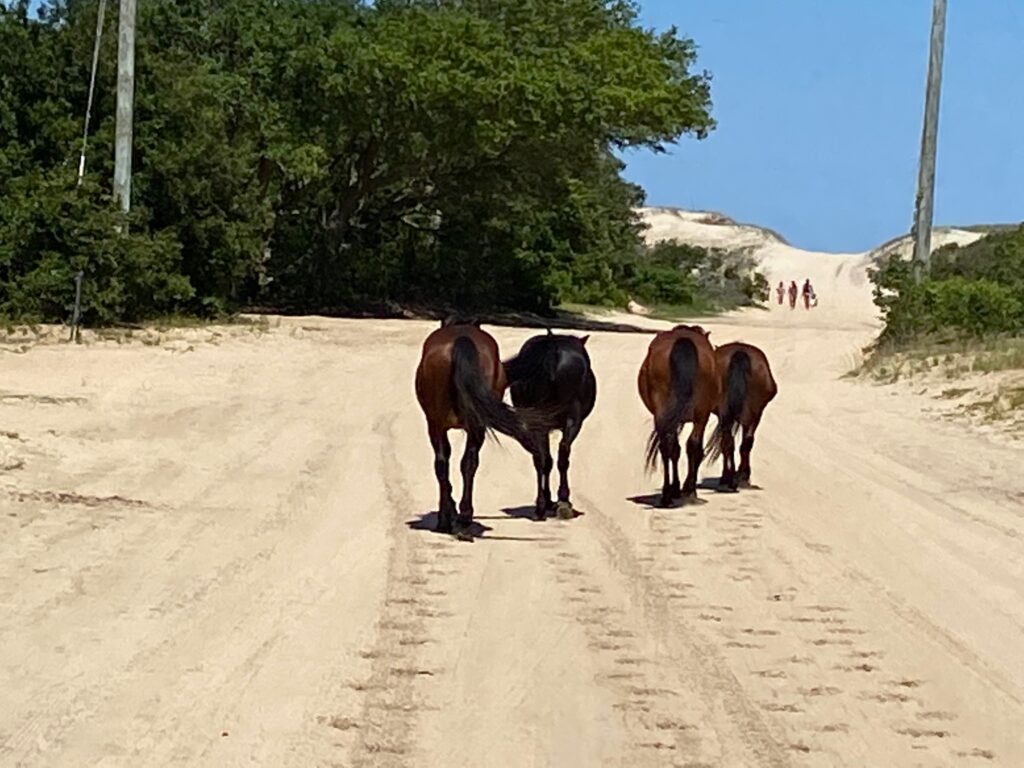
Who the Wild Horses of Carova Are
The herd is officially protected by the Corolla Wild Horse Fund. Genetic testing has confirmed these horses descend from horses brought by Spanish explorers in the 1500s, making them one of the oldest continuously wild herds in the United States. They are smaller than most modern horses, typically 12 to 14 hands at the shoulder, and built tough enough to survive coastal weather, sandy diets of sea oats and beach grass, and the occasional hurricane.
The wild horses of Carova roam a roughly 7,500-acre territory that spans the northern 4×4 beach from Corolla through Carova up to the Virginia state line. Once you are inside that territory, sightings are common but never guaranteed.
Best Times of Day to See the Wild Horses of Carova
Early morning is the single best window. From sunrise through about 9 a.m., the horses are active, moving between feeding areas, and often visible along the dune line, on the beach itself, or grazing in the maritime forest behind the homes. Cool temperatures and quiet beaches make them more comfortable and easier to spot.
Late afternoon, roughly 4 p.m. through sunset, is the second-best window. As the day cools, the horses become more active again. Sunset beach walks frequently turn into horse-spotting walks, especially in the months from October through April when the beach itself is quieter.
Midday in summer is the hardest time. The horses tend to seek shade in the maritime forest and stay out of view during the hottest hours. If you only catch a midday window, look for them tucked into shaded clearings off the canal roads rather than out on the open beach.
Where the Wild Horses of Carova Are Spotted Most Often
The wild horses move with weather, tide, and instinct, so no specific location guarantees a sighting. That said, a few patterns hold true year after year.
Dune lines and beach edges are prime morning territory. Horses use the dunes for shelter and the firm sand near the water for travel.
Maritime forest clearings behind the canal roads are where the horses bed down, raise foals, and ride out hot afternoons. Drive the inland sand tracks slowly and you may spot them through gaps in the trees.
Freshwater seeps and ponds draw horses regularly because they need fresh water daily. Several known seeps exist throughout the Carova OBX area.
Right around rental homes is more common than visitors expect. Many guests report stepping out for morning coffee and finding a horse or small band grazing within sight. Live Oak Landing sits in prime habitat, and our gallery page includes guest photos taken right from the property.
The Safe Viewing Distance: 50 Feet, Always
This is the single most important rule. Federal and state law requires you stay at least 50 feet from the wild horses of Carova at all times. That distance protects you, the horses, and the herd’s long-term survival.
50 feet is roughly the length of a school bus. It feels farther than people expect, especially when a calm-looking horse is grazing in plain view. Stay back anyway. These are wild animals. They kick. They bite. They charge when startled or when foals are present. Tourists are injured every year by misjudging horse behavior.
The horses also cannot eat human food safely. Apples, carrots, and other handouts that are fine for domestic horses cause colic in wild mustangs and can kill them. Several beloved members of the herd have died from well-meaning visitor feeding. Do not feed them. Ever. Even if they approach you, walk away calmly.
How to Photograph the Wild Horses of Carova Responsibly
A 200mm zoom lens or better lets you fill the frame from 50 feet back. Most modern phone cameras with 3x or 5x optical zoom also do well at proper viewing distance. Avoid flash photography, which can spook horses, and never crouch or approach to get a better angle.
Patience produces better photos than proximity. Sit quietly at safe distance, let the horse forget you are there, and wait for natural behavior to unfold. The best wild horse photos guests take from Live Oak Landing are almost always from a deck or porch, not from up close on the sand.
Wild Horse Tours as an Option
If you want a guided experience, several Carova OBX tour operators run daily wild horse tours from Corolla. These are open-air Hummer or Jeep tours that drive guests through known horse territory with a local guide who knows where bands are typically grazing that week. Tours run roughly 1.5 to 2 hours and book up fast in summer.
Tours are a great choice for first-day arrivals, for families with kids who want a guided experience, or for guests staying south of Carova who do not have a 4×4 vehicle of their own.
Why Staying in Carova OBX Beats Day-Tripping
Day-trippers see the wild horses if they get lucky during a 2-hour tour. Guests staying in a Carova OBX rental like Live Oak Landing see them throughout the week, often multiple times per day, from their own decks and porches without ever needing to drive anywhere. The herd lives where the rental homes are. That proximity is the single biggest reason families return year after year. Our a day in the life page walks through what wild horse country actually feels like as a daily experience.
FAQs About the Wild Horses of Carova
How many wild horses live in Carova? The Corolla Wild Horse Fund estimates 80 to 90 Colonial Spanish Mustangs currently roam the 4×4 beaches from Corolla through Carova up to the Virginia line.
Are sightings of the wild horses of Carova guaranteed? No. The horses roam freely and follow their own patterns. However, multi-day stays in Carova OBX rentals lead to sightings the vast majority of the time, especially in the early morning and late afternoon.
Can I touch or feed the wild horses? Absolutely not. Stay at least 50 feet away at all times. Feeding is illegal and dangerous for the horses, several of whom have died from human food.
What should I do if a wild horse approaches me? Stay calm, do not run, and slowly back away to restore 50 feet of distance. Never reach out or attempt to touch the horse.
When is the best season to see the wild horses? Spring and fall offer cooler temperatures and more daytime activity, plus less crowded beaches. Summer sightings are still common, especially in early morning and late afternoon.
Plan Your Wild Horse Vacation
Live Oak Landing sits inside the wild horse range with frequent guest sightings right from the property. Check availability and book your stay and start planning your Carova OBX vacation in the heart of wild horse country.